
How Long Does SEO Take to Show Results? (The Real Timeline)
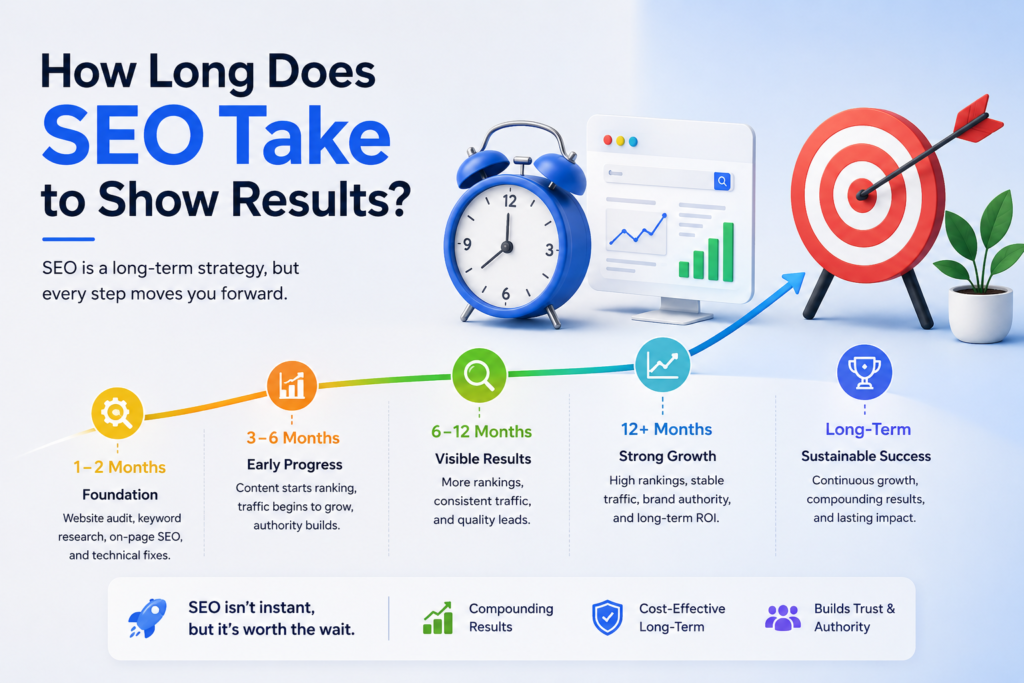
Search Engine Optimization (SEO) typically takes anywhere from 3 to 6 months to show initial, measurable results, while achieving substantial, compounding organic traffic and competitive rankings generally requires 6 to 12 months. Because search engines need time to crawl, index, and build trust signals around new or updated content, progress is inherently gradual rather than instant like paid advertising. The exact timeline depends heavily on your website’s age, historical authority, technical health, and the level of competition in your industry.
If you are investing time, money, and energy into Search Engine Optimization, the burning question on your mind is likely: “When am I actually going to see results?”
Let’s break down why SEO takes time, what the typical month-by-month timeline looks like, and what factors influence how fast you can see success.
The Short Answer: What the Data Says
Industry studies and platform data consistently show that building organic authority doesn’t happen overnight.
-
Brand New Websites: Often take 6 to 12 months (or longer) to build enough trust and authority with search engines to rank for competitive terms.
-
Established Websites: Sites with an existing history and domain authority can often see measurable improvements within 30 to 90 days by fixing technical blocks and optimizing current content.
The Month-by-Month SEO Timeline
SEO progress isn’t linear. Behind the scenes, search engines need time to crawl, index, evaluate, and trust your site changes. Here is what a typical trajectory looks like:
Months 1–2: The Foundation Phase
What’s happening: Deep technical audits, keyword research, fixing broken links, improving site speed, optimizing site structure, and aligning content with search intent.
Visible results: Usually none. Search engines are re-indexing your site. If an agency promises first-page rankings in 30 days, they are likely targeting dead keywords or using high-risk tactics.
Months 3–4: Traction and Long-Tail Movement
What’s happening: Content creation kicks into gear, on-page optimization takes effect, and internal linking structures begin to mature.
Visible results: You will likely notice initial ranking movements, especially for long-tail keywords (specific, lower-competition phrases). Impressions in search console will start to rise.
Months 5–6: Growth and Noticeable Traffic
What’s happening: Google recognizes your site as a consistent, relevant publisher. Backlink acquisition efforts start compounding, and local signals strengthen.
Visible results: A noticeable increase in organic traffic. Target keywords begin climbing past page two onto page one, and initial leads or inquiries start coming through organic search.
Months 12+: The Compounding Effect
What’s happening: Your domain authority has matured. Your content library acts as an established asset, and search engines trust your topical authority.
Visible results: This is where SEO shines. Traffic grows exponentially rather than linearly, and your site competes stably for high-value, highly competitive commercial keywords.
Key Factors That Dictate Your Timeline
Not all websites experience SEO at the same speed. Several critical variables dictate whether you see results in 3 months or over a year:
Website Age & History: Brand new domains have zero “trust” in the eyes of search engines. Older domains with an existing backlink profile have a massive head start.
Level of Competition: Trying to rank for broad keywords in hyper-competitive industries (like finance, e-commerce, or real estate) takes significantly longer than targeting niche, localized markets.
Current Website Health: If a site has deep technical flaws, duplicate content, or a history of penalties, months 1 through 3 will have to be spent entirely on damage control.
Quality & Consistency of Content: Publishing helpful, original content that directly answers user queries accelerates trust. Randomly publishing one blog post a quarter won’t move the needle.
Backlink Profile: Earning links from reputable, authoritative third-party websites acts as a “vote of confidence” that drastically accelerates how fast search engines rank your pages.
Why You Shouldn't Stop SEO Prematurely
One of the biggest mistakes business owners make is pulling the plug at month four because they “don’t see massive sales yet.”
SEO is a marathon, not a sprint. Stopping SEO halfway through is like stopping a workout routine after two weeks—you burn out right before the physical transformation begins. The groundwork laid in the frustrating early months is precisely what powers the exponential revenue and organic leads in the later stages.