
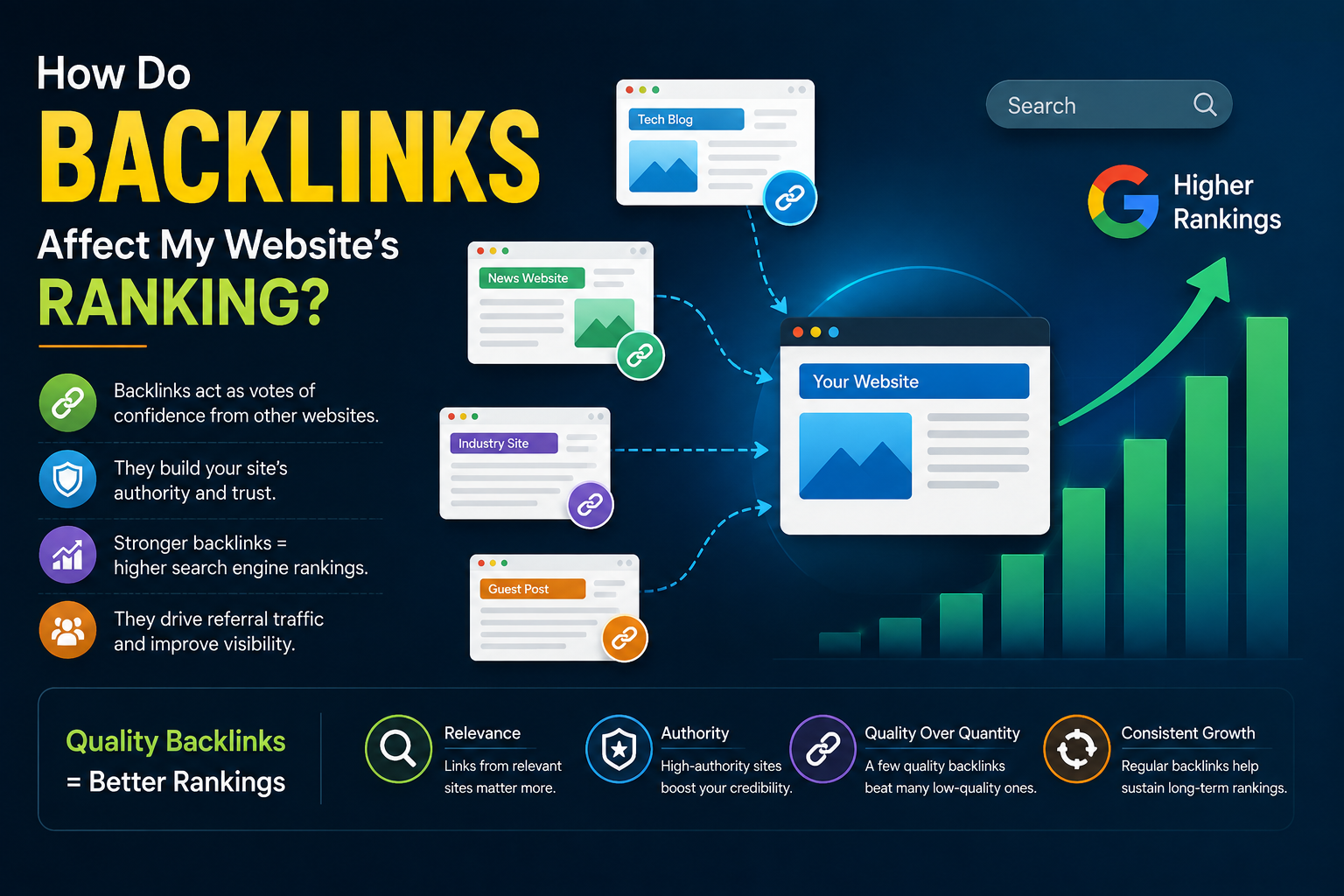
If you have spent any amount of time exploring Search Engine Optimization (SEO), you have undoubtedly heard the term backlinks. They are frequently described as the holy grail of digital marketing, the currency of the internet, and the primary driver behind organic search visibility.
Yet, amidst algorithm updates, shifting ranking factors, and the rise of AI-driven search experiences, many website owners find themselves asking: Do backlinks still matter? And how exactly do they influence my website’s ranking?
The short answer is a resounding yes. Backlinks remain one of the top ranking signals used by search engines like Google. However, the way they affect your rankings has evolved dramatically over the years. Gone are the days when you could buy thousands of cheap directory links and watch your site shoot to number one. Today, the game is all about authority, relevance, and trust.
Let’s dive deep into how backlinks work, why they affect your rankings, and how you can build a powerful link profile that stands the test of time.
What Exactly is a Backlink?
At its core, a backlink (also known as an inbound or incoming link) is simply a hyperlink from one website to another. Think of it as a digital reference or a citation in an academic paper.
When Website A links to Website B, it is effectively saying to its readers—and to search engine crawlers—“Hey, this piece of content is accurate, useful, and worth your time.”
Search engines view these links as votes of confidence. Historically, Google’s foundational algorithm,
, PageRank, was built entirely on the premise that a webpage’s importance is determined by the number and quality of other pages linking to it. While Google’s algorithm now incorporates hundreds of distinct signals—including user experience, machine learning, and content depth—backlinks remain a core pillar of how the web is indexed and evaluated.
Why Backlinks Directly Influence Search Rankings
To understand how backlinks move the needle on Search Engine Results Pages (SERPs), you need to look at what they communicate to search engines.
When an authoritative website links to yours, it passes a portion of its own authority—often referred to in the SEO community as “link juice” or link equity—down to your site.
1. They Pass "Link Equity" (Authority)
A backlink from a globally recognized publication carries massive weight and can significantly elevate your domain’s overall authority.
A link from a brand-new, unvisited blog carries very little weight. The more high-equity votes you accumulate, the more trustworthy your domain appears to search algorithms, making it easier for your pages to rank for competitive keywords.
2. They Signal Topical Relevance
Search engines want to serve users the most relevant answer possible. Backlinks help algorithms determine what your content is about based on the context of the linking site. If you run a website about coffee brewing and receive links from prominent culinary arts blogs, cafes, and barista magazines, Google connects the dots. It realizes your site belongs firmly within the coffee niche, helping you rank higher for industry-specific search terms. Conversely, a random link from an unrelated automotive parts store will do very little to help a coffee blog rank.
3. They Facilitate Faster Indexing and Crawling
Search engines want to serve users the most relevant answer possible. Backlinks help algorithms determine what your content is about based on the context of the linking site. If you run a website about coffee brewing and receive links from prominent culinary arts blogs, cafes, and barista magazines, Google connects the dots. It realizes your site belongs firmly within the coffee niche, helping you rank higher for industry-specific search terms. Conversely, a random link from an unrelated automotive parts store will do very little to help a coffee blog rank.
4. They Drive Targeted Referral Traffic
Rankings are ultimately a means to an end: getting human eyeballs on your content. Beyond SEO, a strategic backlink on a high-traffic industry site acts as a direct pipeline for referral traffic. Readers who trust the source site will click through to read your perspective. This brings engaged visitors to your doorstep, which can lead to conversions, shares, and even more natural backlinks down the line.
Not All Backlinks Are Created Equal
In the early days of SEO, quantity trumped quality. Website owners built automated software to spam comment sections and forum boards with thousands of low-grade links.
Google caught on. Through algorithmic updates like Google Penguin, search engines learned to evaluate the quality of a backlink profile rather than just counting the raw numbers. Today, a single link from an elite industry authority can outperform thousands of spammy links combined.
Several critical factors determine the value of a backlink:
Domain Authority and Trust: Links from established, trusted domains (measured by tools like Ahrefs, Moz, or Semrush) pass significantly more value than links from obscure, low-traffic sites.
Contextual Placement: A link embedded naturally within the main body copy (editorial link) carries far more weight than a link stuffed into a website’s footer or sidebar.
Anchor Text: The clickable text that houses the hyperlink matters. Descriptive anchor text containing relevant keywords helps search engines understand what the destination page is about, though over-optimizing anchor text can trigger spam filters.
Follow vs. No-Follow: Standard dofollow links pass link equity and influence rankings. Nofollow links (and variations like
rel="sponsored"orrel="ugc") tell search engines not to pass ranking credit. While nofollowed links don’t directly boost rankings, they are still valuable for natural traffic and link profile diversity.
Warning: Low-quality, spam-driven, or purchased links from private blog networks (PBNs) can trigger manual penalties or algorithmic devaluation from Google. If search engines suspect you are manipulating your backlink profile, your rankings can plummet overnight.
How to Earn High-Impact Backlinks (The Modern Way)
Because search engines have grown exceptionally smart at filtering out artificial manipulation, your approach to link acquisition must focus on earning links organically through value
Create "Linkable Assets"
The most sustainable way to attract backlinks is to build content that people want to reference. These are called linkable assets and typically include:
Create "Linkable Assets"
Original Research and Data: Conduct an industry survey, analyze trends, and publish the results. Bloggers and journalists love linking to data sources to back up their claims.
Ultimate Guides and Resource Pages: Create the definitive, deeply researched guide on a complex topic in your niche.
Infographics and Visuals: Complex data broken down into clean, shareable graphics are frequently picked up and embedded by other sites with a credit link back to you.
Engage in Strategic Digital PR
Digital PR involves pitching stories, insights, or expert commentary to journalists, reporters, and major publications. Platforms like Featured (formerly Help a Reporter Out or HARO) allow you to provide quotes for news articles in exchange for an authoritative backlink and brand mention.
Practice Ethical Guest Blogging
Writing high-quality guest articles for reputable websites within your industry remains an effective networking and link-building tactic. The key is to prioritize the audience of the host site, ensuring the content is genuinely useful and provides a contextual, relevant link back to a complementary resource on your site.
Conclusion
Backlinks act as the voting system of the internet, telling search engines which websites deserve to sit at the top of the search results. While creating stellar content is the foundation of any successful SEO strategy, content alone often struggles to rank in competitive landscapes without the backing of a robust link profile.
By focusing on earning relevant, high-authority links through digital PR, exceptional content creation, and genuine industry relationships, you can build a resilient backlink profile that drives sustainable, long-term growth for your website’s search rankings.